SANTIAGO · THE FLOWER LOOKING FOR HER GARDEN
LA FLORIDA
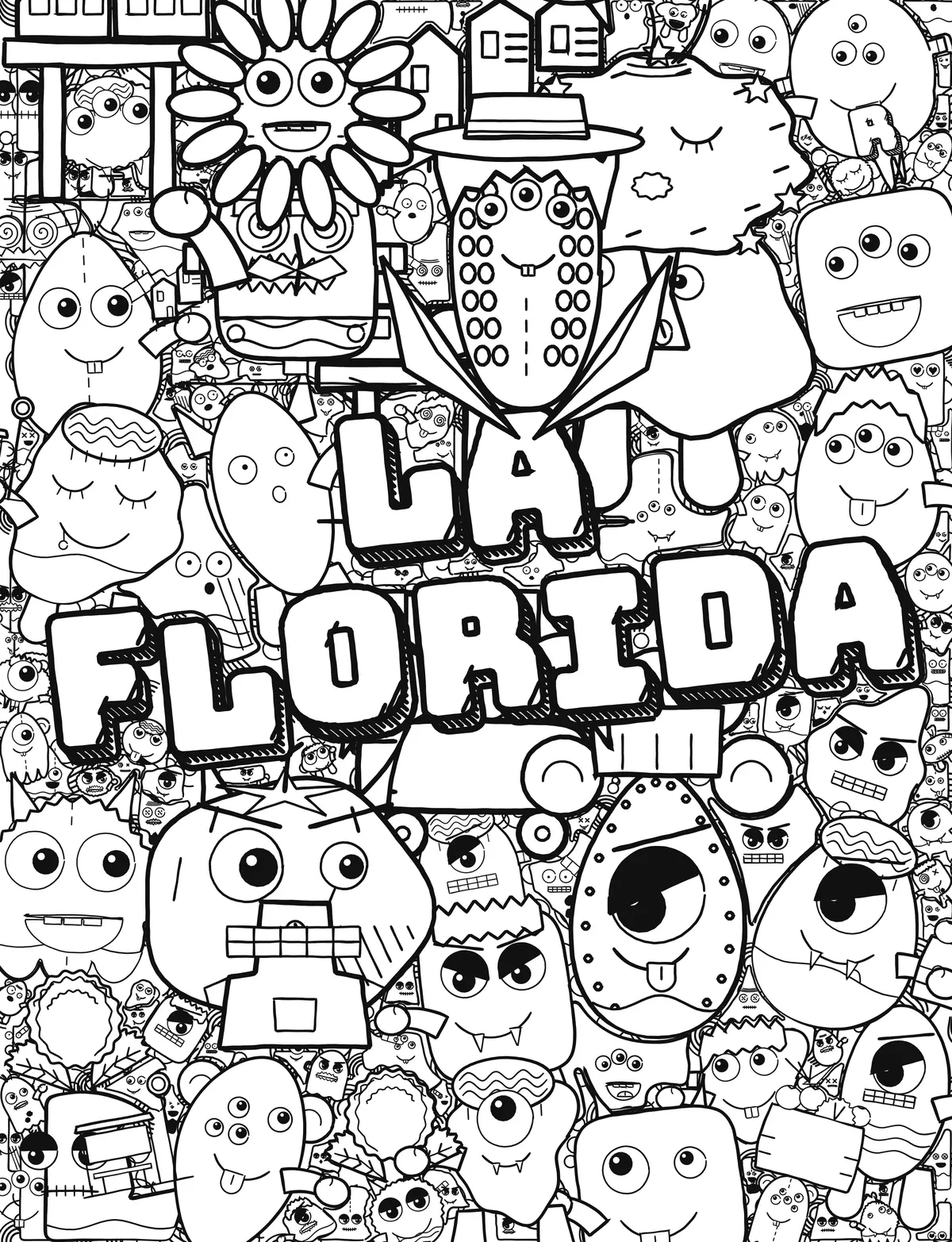

With a name like La Florida, a daisy expected to find a huge garden. She looked from the hill and saw only rooftops. Neighbourhood after neighbourhood, all the way to the cordillera.
She asked an old quillay tree from the Quebrada de Macul, the kind that bears star-shaped fruits. The quillay told her this used to be pure countryside, and the name came from a tiny village also called La Florida. Then so many people arrived that, in the eighties, it was the most populated commune in Chile. Today almost 375,000 people live here. That is what you call growth.
The flower took the metro down, which in this commune has eleven stops, on the line that runs on a viaduct above Avenida Vicuña Mackenna, with a neighbour running behind her. It was Sunday, so she followed the smell of fruit all the way to the Rojas Magallanes fair, one of the most important in Santiago. There a tomato and an avocado were arguing at the top of their voices about which one was fresher.
An ear of corn (choclo) gave her a leaf. He explained, or so they say, what nobody had told her. The garden of La Florida does exist. It is built every Sunday, with crates of red tomatoes, avocados, choclos and lettuces. The flower settled at the next stall, and nobody noticed the difference.
Facts
- Population
- 374,836 inhabitants (2024 Census)
- Area
- 70.2 km²
- The name
- comes from Villa La Florida, which was given the title of villa in 1896
- Most populated
- in the eighties it was the commune with the most inhabitants in Chile
- Metro
- eleven stations; Line 4 runs on a viaduct over Vicuña Mackenna
- Rojas Magallanes fair
- on Sundays, one of the most important in Santiago
Send your coloured drawing
Take a photo of your page and send it. It is published here after a manual review; nothing appears before.
Got it. Your drawing is waiting for review and will show up here once approved.
The photo is larger than 12 MB. Try a smaller one.
That file is not a JPG, PNG or HEIC image.
Too many drawings from this connection for now. Try again in a while.
You need to accept the publication box.
There are many drawings waiting for review. Try again later.
Coloured by readers
No approved drawings on this page yet. Yours can be the first.
Sources
- 374.836 hab. (Censo 2024), quinta comuna más poblada; 70,2 km²; municipalidad desde el 28 de noviembre de 1899; el nombre viene de la Villa La Florida (título de villa el 17 de diciembre de 1896); en los años 80 y parte de los 90 fue la comuna más poblada del país; primeras villas desde 1950; feria libre dominical de avenida Rojas Magallanes, de las más importantes de Santiago; Línea 5 del Metro llegó en 1997; once estaciones de metro, una llamada Los Quillayes; Quebrada de Macul
- Línea 4 del Metro: en viaducto elevado sobre avenida Vicuña Mackenna hasta Puente Alto
- Quebrada de Macul: entre Peñalolén y La Florida, 490 ha, quillay, peumo, litre, zorro culpeo
- Quillay: árbol endémico de la zona central de Chile; fruto en cápsula de forma estrellada; su corteza con saponina se usaba como detergente y para lavar el pelo